

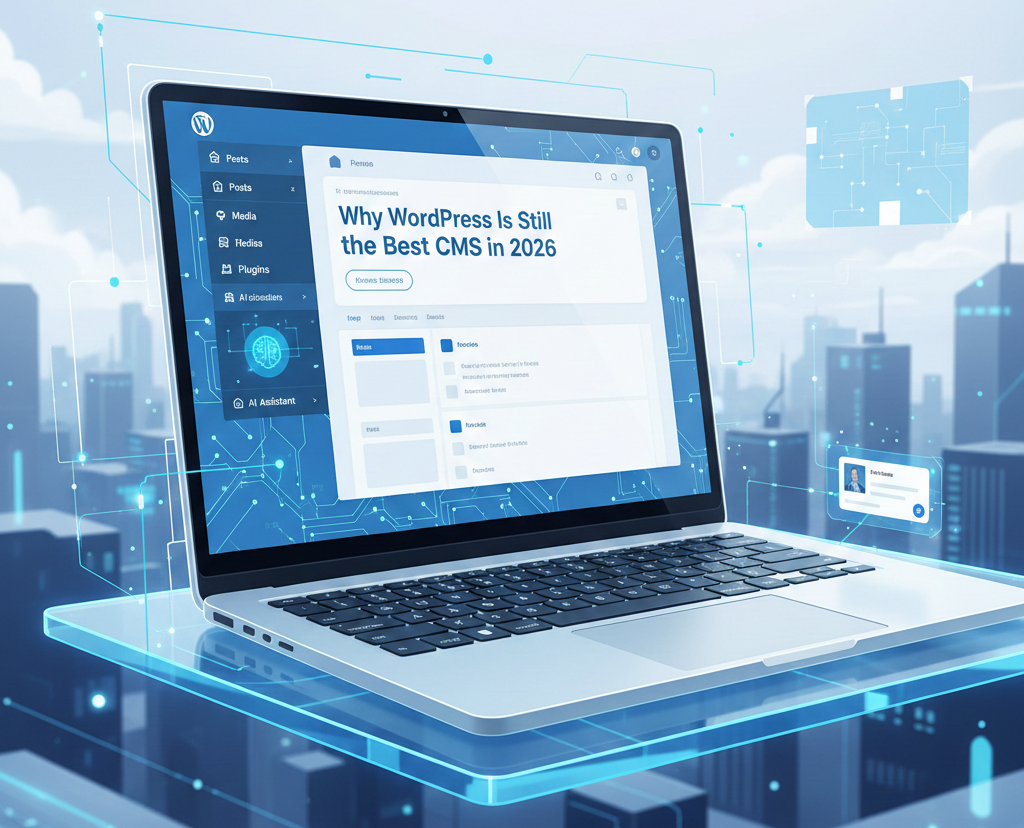
WordPress has been the backbone of the web for over two decades, and even in 2026, it continues to dominate the content management system (CMS) market. Many businesses wonder whether WordPress is still the best CMS in 2026, especially with the rise of AI website builders and no-code platforms. The answer is a resounding yes. WordPress remains unmatched in flexibility, performance, and scalability.
Below, we explore why WordPress continues to be the best CMS in 2026.
1. WordPress Powers a Massive Portion of the Web
WordPress powers over 40% of all websites globally, including blogs, startups, enterprise platforms, and government portals. This widespread adoption proves reliability, stability, and trust.
Choosing WordPress means:
-
Long-term platform stability
-
Continuous updates and improvements
-
Large developer and support ecosystem
External resource: W3Techs WordPress Statistics 2026
2. Open-Source Freedom in 2026
WordPress is an open-source CMS, giving users complete control over their websites. Unlike proprietary platforms, WordPress allows you to customize, extend, and integrate new technologies, including AI tools and headless setups.
Benefits include:
-
No vendor lock-in
-
Full data ownership
-
Faster adaptation to new technologies
3. Extreme Flexibility for Any Website
WordPress is no longer just a blogging platform. It powers:
-
Corporate and enterprise websites
-
E-commerce stores with WooCommerce
-
Membership platforms
-
Learning management systems
-
Landing pages and portfolios
This makes WordPress the best CMS in 2026 for startups, growing businesses, and enterprises alike.
4. Cost-Effective Without Compromising Quality
WordPress is extremely budget-friendly. The core platform is free, and thousands of free and premium plugins and themes are available.
Key advantages:
-
Affordable development and maintenance
-
Scales without expensive licensing
-
Ideal for small businesses and startups
5. SEO-Friendly Architecture
WordPress is built with SEO in mind. Using plugins like Rank Math or Yoast SEO, you can optimize:
-
Meta titles and descriptions
-
URLs and permalinks
-
Schema markup and structured data
Optimizing your WordPress site makes it easier for search engines to rank your website in 2026.
6. Fast Performance and Speed
With modern hosting, caching plugins, and optimized themes, WordPress websites can achieve excellent speed and Core Web Vitals scores. Key tips include:
-
Using lightweight themes and block-based editors
-
Integrating a CDN
-
Optimizing images
7. Strong Security Features
WordPress has significantly improved its security over the years. To maintain a secure website:
-
Keep themes and plugins updated
-
Use strong passwords and proper user roles
-
Install security plugins like Wordfence
8. Massive Plugin and Theme Ecosystem
WordPress offers over 60,000 plugins and thousands of themes. You can add advanced functionality like AI-powered tools, analytics, or multilingual support without writing custom code.
9. Future-Proof for 2026 and Beyond
WordPress supports:
-
Headless CMS setups
-
REST API and GraphQL
-
AI-assisted content creation
-
Accessibility and modern performance standards
These features make WordPress the best CMS in 2026 for future-ready websites.
Conclusion
WordPress remains the best CMS in 2026 because it offers unmatched flexibility, performance, SEO capabilities, security, and long-term reliability. Whether you’re running a small blog or a large enterprise, WordPress provides the tools and freedom necessary to succeed in the ever-evolving digital landscape.